3DVerifierBench measures whether a model can verify a specific requirement, explain a contradiction, and respond consistently when the requirement or candidate changes.
We introduce ten verification tasks, build a structured training resource, and study how verification can support candidate selection and human-guided refinement.
Read the abstract +
Recent advances in multimodal large language models (MLLMs) and 3D generation have significantly expanded AI capabilities in understanding and synthesizing 3D content. However, beyond visual fidelity, task-specific correctness grounded in 3D evidence remains a major challenge. We argue that building reliable 3D systems requires not only stronger generation and reasoning, but also verification feedback that identifies unmet requirements and explains their violations to support reflection and refinement. Such feedback must integrate multi-view observations and distinguish genuine inconsistencies from projection-dependent appearances. In this work, we make three contributions. First, we introduce 3DVerifierBench, a benchmark spanning 10 tasks that evaluates decisions, rejection explanations, and responses to controlled changes in specifications and candidates. A human study reveals a 21.6 percentage-point gap between humans and the strongest tested model, GPT-6 Astra, while explanation-aware analysis exposes weaknesses in rejection reliability. Second, we analyze verification across fine-grained factual categories, exposing errors in values and target binding. We develop a scalable pipeline combining multi-view fact extraction, controlled 3D editing, and native annotations to produce 14,126 training examples with contradiction explanations and linked counterfactuals. Third, we examine how verification could support 3D generation through candidate selection and recursive refinement. In human-labeled sixteen-candidate pools, oracle selection improves complete factual success from 26.7% to 90.0%. In a separate eight-input study, human-guided recursive refinement satisfies all seven requirements for every input, compared with three under parallel Oracle@8. Together, our benchmark, analysis, and data pipeline establish a foundation for reliable 3D verification to support reflection and refinement in 3D generation.
3DVerifierBench
2,581human-reviewed benchmark examples
10complementary verification tasks
14,126training examples across 7 tasks
Requirement+3D evidence→Answer+Explanation
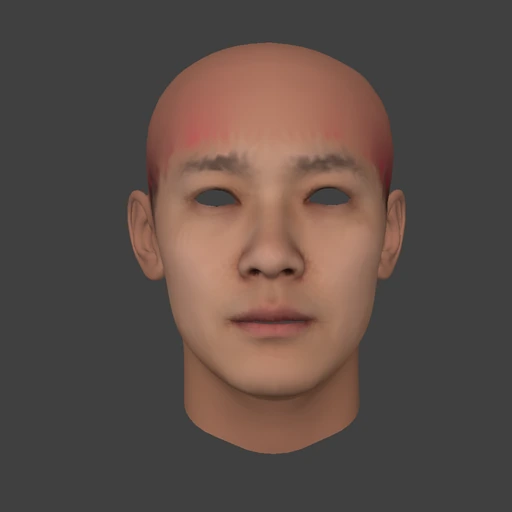
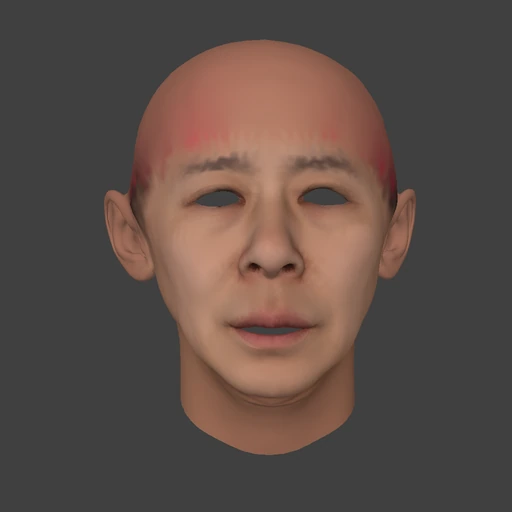
From object attributes to temporal motion, each task asks whether the evidence satisfies an explicit requirement. Select a task to inspect a paper example.
Overall accuracy (OA): mean task-level balanced accuracy.
View the numerical results +
Scores reported in the paper (%)
Model / evaluator
Overall
ExpOA
Triplet
ExpTriplet
Reflect to improve 3D generation.
01 / CANDIDATE SELECTION
Choosing from 16 candidates
For each of 40 inputs, eight Pixal3D candidates and eight Hunyuan3D-2.1 candidates are evaluated against seven factual requirements.
The human oracle selects using the final human labels, revealing the upper bound available from reliable selection.
Table 4 · Full factual success requires all seven facts.
Full factual success
All seven factual requirements satisfied.
02 / HUMAN-GUIDED RECURSIVE REFINEMENT
One missing grille. Two rounds of feedback.
Requirement
“Two large oval black mesh grilles on the sides.”
Initial generationAnswer False · 6/7
Hunyuan3D-2.1
Explanation
Missing grille. A stray black mark remains.
Edit round 1Answer False · 6/7
Image redraw → Hunyuan3D-2.1
Explanation
Partial grille. The stray mark is removed.
Edit round 2Answer True · 7/7
VecSet-Edit · texture-only
Explanation
Dense grille restored. All seven facts are satisfied.
HUMAN VERIFIER FEEDBACK
“Restore the side mesh grilles; remove the stray black mark.”
→
“Add dense mesh to the side insert; preserve geometry and appearance.”
EIGHT-INPUT REFINEMENT STUDY
Each condition adds to the previous one.
8 / 8all seven facts
7 / 8+ no severe defects
6 / 8+ source fidelity
Parallel Oracle@8 satisfies all seven facts for 3/8 inputs. These studies motivate stronger verification to help generators reflect on unmet requirements; the refinement trajectory uses human feedback.
14,126 examples across seven tasks, with contradiction explanations and linked counterfactuals.
Please email the authors to obtain this.
Code & evaluation
Evaluation scripts, task definitions, schemas, and provenance.
Repository link pending
Citation
@misc{li2026groundinggenerativeverification3d,
  title={Grounding Generative Verification in 3D Content},
  author={Shuanglin Li and Jiaying Lin and Shuquan Ye},
  year={2026},
  eprint={2610.22360},
  archivePrefix={arXiv},
  primaryClass={cs.CV},
  url={https://arxiv.org/abs/2610.22360},
}
Source assets and annotations remain subject to their upstream licenses. See Appendix F for the resource scope and provenance.
 Requirement
 GPT-6 Astra
 AnswerPerfect✕
 Explanation
 Human reference